
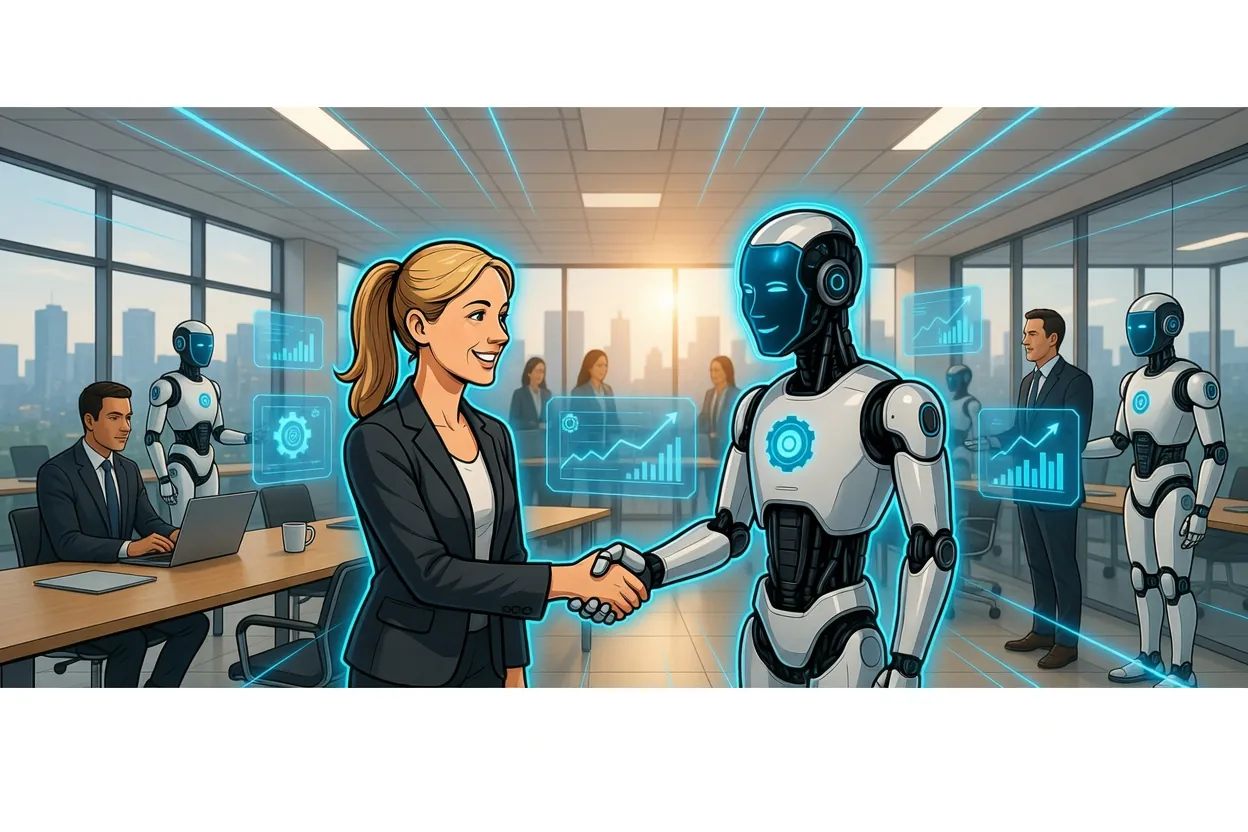
Agents that run your business.

Agent teams built on Microsoft Foundry and the Microsoft Agent Framework automate end-to-end business processes without adding headcount.

Deploy directly into your Microsoft 365 tenant so automation runs through the apps where your people already spend their day. Claude Cowork and standalone Azure agents cover everything outside that surface.

Frequently Asked Questions

What is Agentic AI?
Agentic AI refers to AI systems that autonomously plan, decide, and execute multi-step tasks without step-by-step instructions. Unlike chatbots that respond to single queries, agentic AI pursues goals, calls tools, coordinates with other agents, and completes end-to-end processes (from data lookup to approval routing to content publishing) without human involvement at each step.
Which Microsoft platform is right for my use case?
Copilot Studio is best for business teams that need department-level agents inside Microsoft 365 (approvals, reporting, document workflows) without developer involvement. Microsoft Foundry is the choice for complex multi-agent systems requiring governance, evaluation pipelines, and enterprise-grade orchestration. Claude Cowork covers desktop automation where individuals need a personal agent that handles files, emails, and cross-application tasks conversationally.
How long does it take to deploy a first AI agent?
A focused pilot targeting one high-repetition process typically reaches production in 2–4 weeks. The timeline depends on integration complexity and data availability. Most pilots start with a single, clearly scoped workflow to prove value before expanding to more complex use cases.
Do agents have access to our internal data?
Agents built on Microsoft Foundry and Copilot Studio run inside your Microsoft 365 tenant with Entra ID identity protection, Purview compliance, and a full audit trail. Data access is scoped to exactly what the agent needs, governed by the same policies that apply to your human users. Agents do not use your data to train external models.
What happens when an agent makes a mistake?
Enterprise agents are built with human-in-the-loop gates at decision points that carry business risk. Mistakes are logged automatically and traced back to the specific action and context that caused them. Evaluation pipelines run continuously so performance regressions are caught before they reach production. Most workflows start in a supervised mode and graduate to autonomous operation once error rates meet defined thresholds.