

Agentic Engineering Pays Off

Agentic Engineering Pays Off

Agentic software engineering uses AI coding agents to handle planning, implementation, testing, and refactoring across the full development lifecycle. It separates what a company knows from what gets built. Conventions, architecture decisions, and workflows are encoded into a structured harness any agent can operate against.

Small and mid-size companies can now get enterprise-grade delivery quality without the headcount. Production-ready code, architecture documented, tests in place, and a codebase the next hire understands on day one.

The harness handles the repetitive work: code review, test generation, refactoring, and documentation. I handle the architectural decisions, guardrails, and delivery sequencing that keep the codebase coherent. Working software, not a consulting report.
Four Stages That Actually Work

Four Stages That Actually Work

Agentic engineering is delivered in four stages. Project setup comes first: architecture, dependencies, and conventions are mapped before any agent touches code. Tooling follows: MCP servers, terminal access, and repository search connect agents to the full codebase.

Planning produces a structured spec before a single line is written. The harness encodes conventions, architecture decisions, and coding standards as agent instructions. A continuous learning loop captures observations from every sprint and feeds improved instructions back into the harness.

Each stage has a scoped deliverable and does not require rebuilding existing infrastructure. The first stage alone is enough to have agents working reliably on your codebase.

Pick the Model That Fits the Job

Pick the Model That Fits the Job

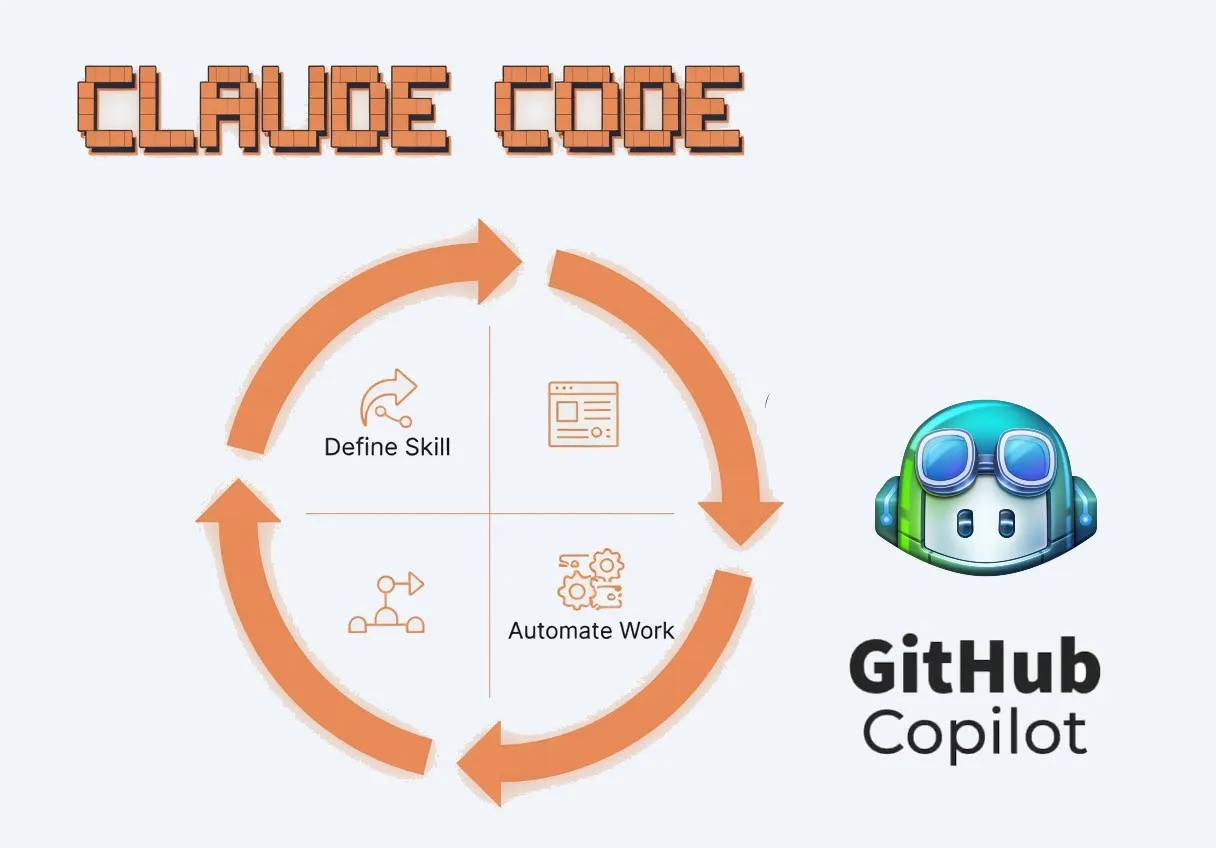
GitHub Copilot and Claude Code both power the agentic harness. GitHub Copilot is the enterprise choice: tenant isolation, policy controls, and model selection across a broad range of providers. Claude Code handles autonomous multi-step terminal work.

Model routing matters. Sonnet and Opus are strong general-purpose choices. Qwen 3.6 handles high-volume harness tasks at lower cost. Kimi K2.6 excels on design-focused and UI-intensive work. DeepSeek V4 Pro competes with frontier models at a fraction of the cost.

Routing each task to the right model is a delivery skill. The workflows built here outlast vendor changes and keep delivery independent of any one provider. The result: always the best tool for the task, not the most familiar one.

faster feature delivery (GitHub Copilot research, 2023)
↓60%
repetitive dev work (McKinsey, 2023)
0
loss of engineering rigor
< 1wk
agents active on your codebase
The Agentic SW Engineering Playbook
Analyse & Plan 3 steps
01
Greenfield or Brownfield: Know What You Are Working With
Before any agent touches your codebase, it needs to understand what it is working with. A structured analysis maps architecture, dependencies, conventions, and gaps. Greenfield projects need a foundation built from scratch: instruction files, CLAUDE.md, context hierarchy, and model selection. Brownfield codebases need mapping first: what exists, what is undocumented, and where agent autonomy is safe to grant. The output is a configuration baseline every subsequent step builds from.
02
Configure Your Coding Partner
GitHub Copilot and Claude Code configured for your specific stack: instructions files, CLAUDE.md, MCP server wiring, permission scoping, and model selection tuned to task type. This is where the coding wizard takes shape: a repo-aware agent that understands your conventions, can read your architecture, and operates within defined guardrails from the first session. Ad-hoc prompting produces ad-hoc results. A tuned harness produces consistent delivery.
03
Plan Before You Build
Spec-driven development replaces guesswork with explicit goals, captured constraints, and task decomposition before a single line is written. We have developed an intensive stepwise planning process built around continuous discussion loops: each step is interrogated, constraints are surfaced, and ambiguities resolved before execution begins. Plan Mode produces task packages sub-agents can execute without course-correction, tracked through ledger-based execution that records every decision and state transition. A well-formed spec is the highest-leverage hour in any agentic sprint: it determines whether agents converge or drift.
Wire the Harness Layer 3 steps
04
The Agentic Coding Harness
The agentic coding harness is the structured environment that makes agents effective rather than just capable. It consists of a constitution: the instruction files, CLAUDE.md, and coding conventions that define how agents reason and behave in your codebase. MCP servers extend what agents can reach: databases, APIs, file systems, and external tools all become addressable. Custom agents and sub-agent teams are wired together with defined contracts and handoff patterns. The harness is not a one-time setup. It is an engineered layer that grows more capable as your team learns what agents need to perform reliably.
05
Encode Your Team's Knowledge as Skills
Skills are the unit of reusable agent capability. Every repeatable workflow: scaffolding, refactoring, migration, documentation, code review, becomes a versioned skill any agent in the organisation can invoke. Prompt libraries and engineering playbooks encode how your team works, so every agent starts from validated patterns, not from scratch. Agent capability that lives in one engineer's head does not scale. Skills make it organisational.
06
Capture Every Agent Action with Hooks
Hooks are the nervous system of the agentic harness. PreToolUse and PostToolUse hooks enforce policy gates, validate inputs, and intercept outputs before they land. Notification and Stop hooks feed structured observations into the second brain: every significant action, correction, and decision is captured automatically, not just when the engineer remembers to write it down. The result is a continuously updated knowledge base that grows alongside your codebase, feeding improved instructions back into the agents that generated the insights in the first place.
Build with Agents & Ship with Confidence 2 steps
07
Build with Agents
Custom agents, multi-agent orchestration, and agentic coding patterns turn plans into working software. Domain agents handle backend, frontend, docs, and testing in parallel. The orchestrator coordinates handoffs, validates contracts between agents, and manages merge sequencing. Output is reviewed, not rewritten. Context isolation between parallel agents prevents interference and keeps each lane converging on its own done criteria.
08
Ship with Confidence
Tests, linting, preview builds, and runtime checks embedded at every step mean quality travels with velocity rather than trading against it. Hooks enforce policy gates before commits land. CI/CD agents handle deployment pipelines without manual intervention. High-velocity agentic delivery without guardrails produces high-velocity regressions. This step ensures the two never separate.
Improve & Scale 2 steps
09
Second Brain & Learning Loop
User, session, and repo-scoped memory gives agents persistent context across sessions. Hook-driven knowledge capture turns observations into structured notes automatically. Conversations become skills. Observed behaviour becomes improved instructions. The autoresearch loop then validates those improvements: deterministic experiments run against proposed skill changes, output quality is measured against baseline, and changes are promoted or reverted automatically. The result is an agentic harness that compounds understanding with every sprint rather than starting fresh each time.
10
Re-evaluate and Scale
Organisation-wide adoption requires consistent measurement and deliberate re-evaluation. Repository conventions, shared agent workflows, and structured onboarding replicate proven patterns across every engineering team. Quarterly re-evaluation determines which skills need to evolve, which workflows to retire, and where new agent capabilities should be introduced. Outcomes become consistent, measurable, and governable at the level your CTO can report on.