
What Agentic Software Engineering Means

What Agentic Software Engineering Means

Agentic Software Engineering turns AI coding tools into structured delivery partners instead of ad-hoc assistants. While competitors are still debating AI adoption, teams using agentic workflows are already shipping faster, modernizing legacy systems, and staying ahead in production with less manual overhead.

The goal is not uncontrolled code generation. It is a disciplined engineering workflow where agents help plan, scaffold, refactor, document, and validate changes — while humans remain accountable for architecture and outcomes.

This approach reduces repetitive work, accelerates multi-step delivery tasks, and keeps implementation tightly aligned with real product goals across the full engineering lifecycle.

Start implementing features that matter instead of writing boilerplate.
Let Coding Agents, Tools & Skills do the Heavy Lifting

Let Coding Agents, Tools & Skills do the Heavy Lifting

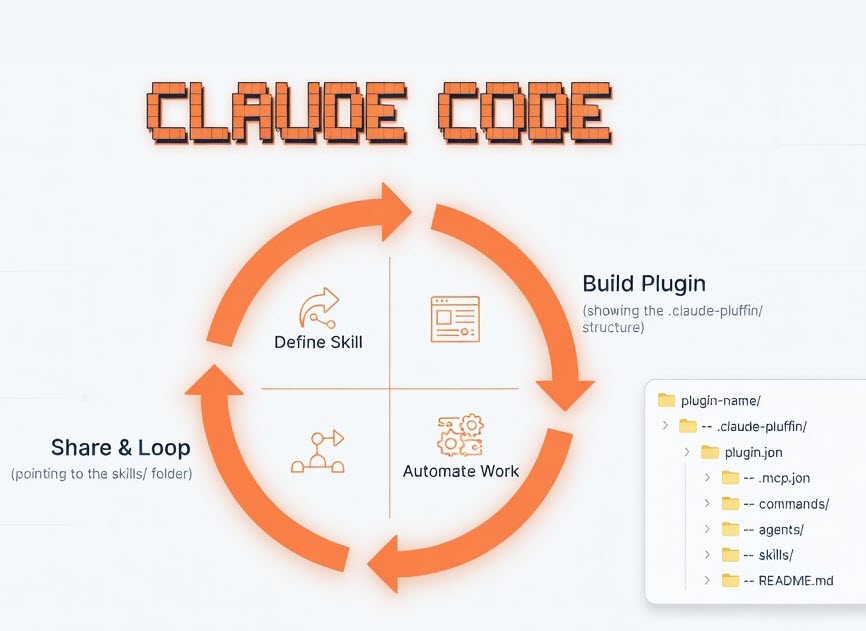
Strong agentic workflows depend on the right tooling around the model. GitHub Copilot handles inline assistance, completions, and agent-mode tasks inside the editor, while Claude Code takes on autonomous multi-step work — refactoring, documentation, build fixes, and cross-file changes — directly from the terminal.

Model Context Protocol, terminal automation, and repository-aware search extend both tools beyond single-file edits, giving agents access to the full codebase context they need to do useful work.

With the right setup, GitHub Copilot and Claude Code can inspect architecture, run builds, verify behavior, generate tests, and support engineers across implementation, operations, and maintenance tasks — turning repetitive delivery toil into automated, reviewable output.

Ensure control by implementing Spec-Driven Development

Ensure control by implementing Spec-Driven Development

We’ve all been there. A coding agent confidently rewrites a working module, removes a guard clause it didn’t understand, and breaks something that was fine for years. The problem isn’t the agent — it’s the lack of structure around it.

Spec-Driven Development fixes this. You define goals, capture constraints, and break work into clearly structured tasks before any code is written. Agents thrive on this — well-scoped, unambiguous tasks dramatically reduce hallucinated rewrites and out-of-context changes.

Paired with automated testing at every step, each agent output is verified before it merges. Linting, unit tests, and preview builds act as guardrails, not afterthoughts.

The result: faster delivery, fewer regressions, and coding agents that actually behave like reliable engineering partners.

faster feature delivery
↓60%
repetitive dev work
0
loss of engineering rigor
29yr
enterprise delivery experience
From First Prompt to Enterprise Scale — in 9 Steps
01
Master the Platform Before You Automate It
Engineers who don't understand what agents can and cannot own will either over-delegate to them or underuse them — both are expensive. Hands-on training in GitHub Copilot, Claude Code, and the agentic engineering stack gives every engineer a working mental model of agent capabilities, limitations, and failure modes. Your team directs agents with precision instead of being surprised by them.
02
Turn AI Tools into Real Delivery Partners
Ad-hoc copilot usage produces ad-hoc results. Moving from scattered inline suggestions to structured agents that plan, scaffold, refactor, and document requires a deliberate foundation — GitHub Copilot for inline assistance integrated with Claude Code for autonomous multi-step tasks, wired into your existing workflows. Engineers redirect their focus to architecture and design, not boilerplate.
03
Build the Right Infrastructure Around Your Agents
Agents are only as capable as the tools they can access. MCP integration, terminal automation, and repository-aware search give agents full visibility into your codebase — they can inspect architecture, run builds, read test output, and verify behaviour across your entire product without context switching. Agents that work across your full stack instead of single files.
04
Living Docs That Keep Agents in Context
Agents make wrong decisions when the codebase doesn't explain itself. Architecture decision records, coding conventions, agent instructions, and up-to-date READMEs give agents the context they need to make correct decisions without constant human course-correction. Every new agent working on your codebase understands it before touching it.
05
Replace Guesswork with Spec-Driven Workflows
Guesswork in delivery produces drift — work that technically ships but doesn't match what was asked. Spec-driven workflows replace ambiguity with explicit goals, captured constraints, and task decomposition before implementation begins. Every sprint ends with goal-aligned, reviewable output that matches what leadership asked for — and leaves a paper trail for future agents to build on.
06
Ship Confidently with Built-In Guardrails
High-velocity agentic delivery without guardrails produces high-velocity regressions. Tests, linting, preview builds, code review, and runtime checks embedded at every step mean quality travels with velocity rather than trading against it. You ship more per week and roll back less.
07
Extend AI Beyond Code to the Full Delivery Lifecycle
Agentic patterns that stop at the editor boundary leave most of the delivery lifecycle on manual. Applying the same agent-driven approach to CI/CD pipelines, infrastructure as code, documentation, migration work, and operational runbooks removes friction at every stage of delivery, not just where code is written. Feedback loops from commit to production tighten continuously.
08
Self-Improving Skills & Governed Engineering Playbooks
Agent capability that lives in one engineer's head doesn't scale, and ad-hoc prompts produce inconsistent outcomes across teams. Investing in reusable agent skills, prompt libraries, and engineering playbooks — version-controlled and distributed across the organisation — means every team starts from validated patterns, not from scratch. Your engineering capability compounds with every new playbook instead of resetting each sprint.
09
Make It Stick Across Every Team
Isolated pockets of agentic productivity are not a competitive advantage — organisation-wide adoption is. Repository conventions, shared agent workflows, and structured onboarding replicate proven patterns across every engineering team, not just the ones that figured it out first. Outcomes become consistent, measurable, and governable at the level your CTO can actually report on.
Agentic Stack
Microsoft Platform

Microsoft Certified since 1997

Professional Services

AI Transformation

AI Transformation

Master the shift from exploration to real impact with a guided path to AI adoption. I help organizations unlock the value of AI agents and intelligent automation to streamline workflows, reduce routine tasks, and boost productivity across the business.

Through collaborative assessments and practical co-creation, we identify high-value opportunities where AI can enhance decision-making, accelerate execution, and improve customer and employee experiences.

With strategic guidance and hands-on support, your teams gain the clarity, skills, and confidence to integrate AI into everyday operations, enabling scalable, sustainable transformation that delivers meaningful business results.

Architecture & Engineering

Architecture & Engineering

Design and deliver AI solutions with a clear architectural foundation that aligns business goals with the right technical approach. I help organizations choose the best path for each scenario, from low-code options like Copilot Studio to engineered pro-code solutions using Microsoft Foundry or the Agent Framework.

From proof-of-concepts through implementation, testing, and optimization, I focus on the engineering required to build secure, reliable, and scalable AI systems. This includes defining robust architectures, validating feasibility, integrating AI agents, and ensuring operational and compliance readiness.

With a focus on long-term scalability and governance, I turn concepts into production-ready platforms and agentic solutions that accelerate innovation and deliver strong business value.

Training & Team Enablement

Training & Team Enablement

Empower your workforce with expert-led guidance built on over 29 years of global experience. I help teams build the skills and confidence needed to thrive amid accelerating change—especially as agentic software engineering, automation, and AI-driven ways of working reshape expectations.

Through hands-on learning and real-world scenarios, your organization gains practical capabilities to adopt AI effectively, respond to disruptive challenges, and stay ahead of the increasing pace of innovation.

With tailored programs and collaborative mentoring, your teams grow from foundational understanding to confident execution—building intelligent, scalable solutions and contributing to a future-ready, AI-enabled enterprise.

Agentic Hugo CMS

Agentic Hugo CMS

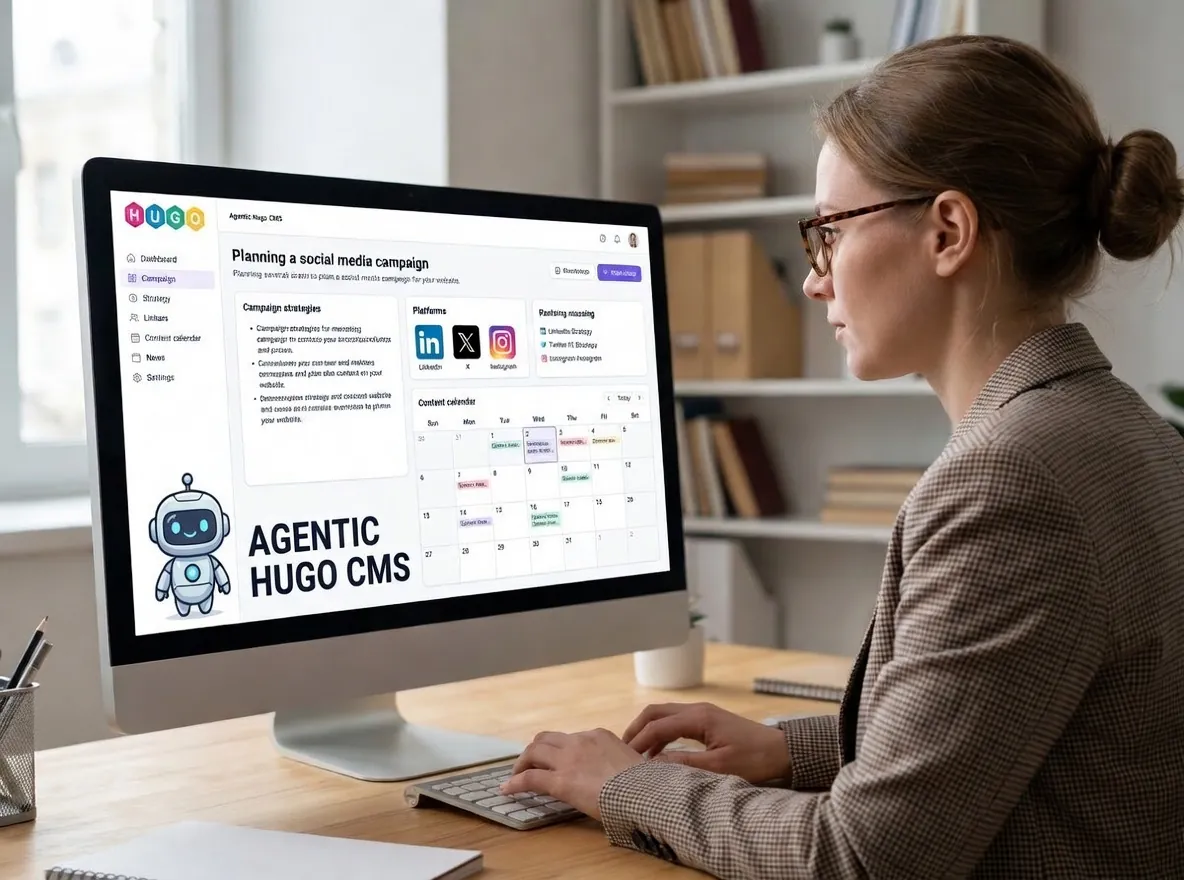
Build AI-ready, lightning-fast websites with Hugo — extended with dynamic backends and autonomous content agents. From static site to fully agentic publishing platform, we handle migration, architecture, backend development, and automation so your teams can focus on strategy.

Autonomous content agents research topics, draft articles, and publish multi-channel media campaigns — then analyse engagement and report back on what worked. Your site stays fresh, your campaigns run themselves, and your team focuses on strategy.